Turbot: A Fishmonger's Guide
The premium flat fish: rich, firm, and buttery. Worth every penny, and best roasted on the bone
Also known as: Brill (close relative)
When Is Turbot In Season?
Turbot is at its best from spring into summer, when Channel fish are firm, well-conditioned, and at their finest.
Please note that all wild-caught fish is always subject to availability, catches and weather conditions.
What Is Turbot?
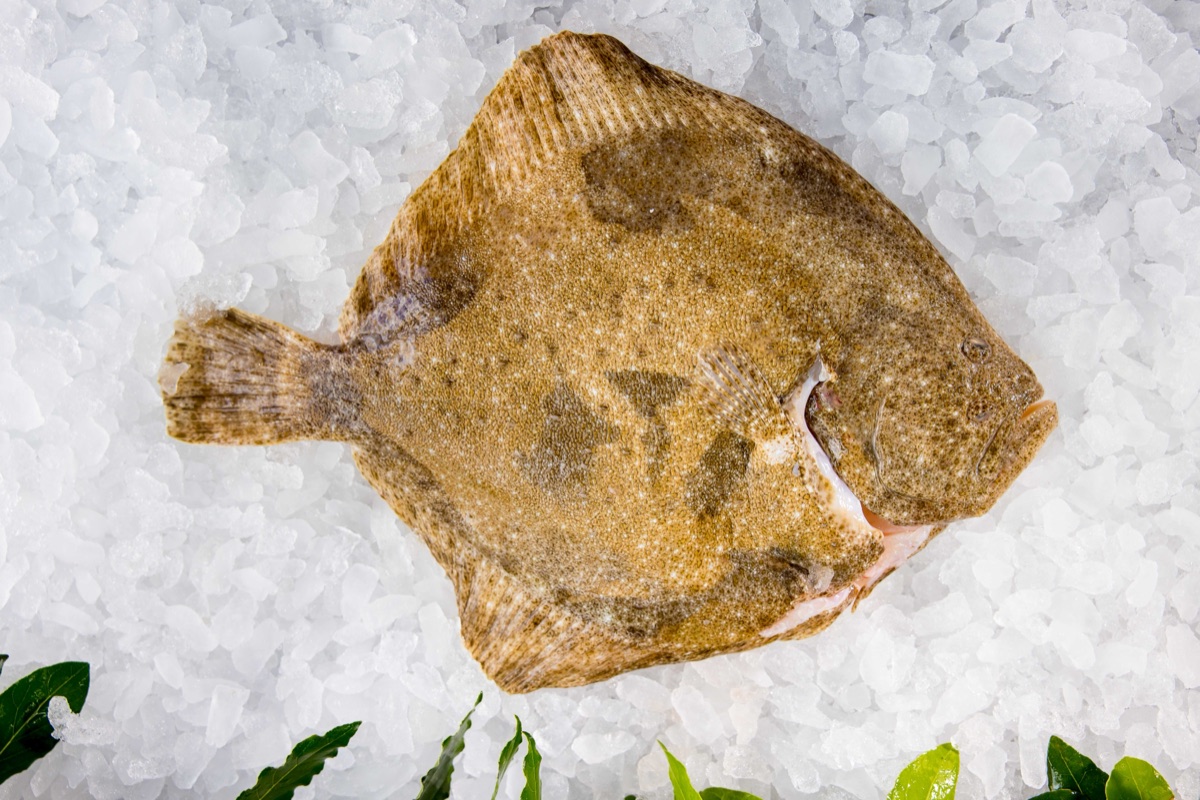
Turbot (Scophthalmus maximus) is, by common consent, the king of the flat fish, the one chefs reach for when nothing else will do. It’s a large, almost circular flatfish with knobbly, mottled brown skin, lying on the seabed of the Channel and the North Sea. What’s underneath that unpromising exterior is the prize: dense, firm, pearly-white flesh with a rich, sweet, buttery flavour that no other flat fish quite matches.
It’s expensive, and it’s worth it. Turbot is a fish for a celebration.
Where Our Turbot Comes From
The English Channel and South Coast grounds. Turbot is landed by Channel boats, and because it’s a premium fish, it’s graded and handled carefully. We buy it whole and can prepare it as you wish: kept whole for roasting, cut into tronçons (cross-section steaks on the bone), or filleted. Ask Steve what’s come in; a good turbot is an event.
The Best Time to Buy Turbot
March through August, with the peak from April to June. Turbot is at its finest in spring and early summer, when Channel fish are firm and well-conditioned. It’s a fish to seek out in season rather than buy year-round.
How To Cook Turbot
With a fish this good, the watchword is restraint.
Roasted on the bone: The classic and the best. A whole turbot or a thick tronçon, generously buttered and roasted in a hot oven until just set. The bone keeps the flesh succulent and adds flavour. Serve with hollandaise or simply with the buttery juices and lemon.
Pan-fried: Thick fillets or steaks, in foaming butter, a few minutes a side until golden. Baste as it cooks.
Grilled or poached: Both work, thanks to that firm texture, but roasting on the bone is where turbot truly shines.
Don’t overwhelm it. A great turbot needs little more than butter, lemon, and good potatoes.
Buying Tips From The Counter
- Firm and pearly. Good turbot flesh is bright, firm, and springy. It should look pristine.
- Buy on the bone. Turbot is at its best roasted on the bone, whole or as a tronçon.
- Size up for a crowd. A large turbot is a centrepiece that carves at the table.
- Ask, and book it. A good turbot doesn’t sit around. Call the counter ahead of a special meal.
Turbot From Parkstone Fisheries
We bring in whole turbot when the Channel boats land it: kept whole, cut into tronçons, or filleted to order. For a special occasion, call Steve at the counter and we’ll set one aside. For another firm, premium fish, see our Dover sole guide. Free delivery across all BH postcodes, £40 minimum order.
From Our Counter
Buy Turbot From Parkstone Fisheries
Fresh, prepared to your specification, and delivered across all BH postcodes by refrigerated vehicle.
Turbot: Frequently Asked Questions
Why is turbot so expensive?
Because it's a slow-growing, hard-to-catch fish with flesh that chefs rank above almost any other. Turbot has a firm, buttery texture and a rich, sweet flavour that no other flat fish quite matches, and supply is limited. It sits firmly at the luxury end of the counter: a fish for a special occasion rather than a midweek supper.
What's the difference between turbot and brill?
They're close cousins. Turbot (Scophthalmus maximus) is the firmer, richer, more prized (and pricier) of the two, with a knobbly, almost warty skin. Brill (Scophthalmus rhombus) is smoother-skinned, slightly softer, and a touch cheaper, often recommended as a more affordable alternative. Both are excellent; turbot is the king.
How should I cook turbot?
On the bone if you can. A whole turbot, or a thick turbot 'tronçon' (a cross-section steak on the bone), roasted in a hot oven with butter is the classic and the finest. The bone protects and flavours the dense flesh. It's firm enough to pan-fry, grill, or poach too, but with a fish this good, keep the treatment simple and let it speak.
Explore More Species
Dover Sole
The king of flat fish: Channel-caught, firm, and best cooked simply in butter
Read guide →Lemon Sole
Not actually a sole, but one of the loveliest flat fish in the Channel: delicate, sweet, and perfect for a quick supper
Read guide →Monkfish
Firm, meaty, and almost impossible to overcook badly: the so-called poor man's lobster
Read guide →Poole's Fishmonger Since the 1920s
Order Fresh Fish Today
Browse our shop online, call us on 01202 747661, or visit us at 12 Bournemouth Road, Poole.