Haddock: A Fishmonger's Guide
Fresh haddock, smoked haddock, and why some of us prefer it to cod: origin, season, and the proper way to cook both
Also known as: Atlantic haddock, finnan haddie (cold-smoked)
When Is Haddock In Season?
Available all year round.
Please note that all wild-caught fish is always subject to availability, catches and weather conditions.
What Is Haddock?
Haddock (Melanogrammus aeglefinus) is cod’s slightly more interesting cousin. Same family, similar habitat, similar uses, but a finer flake, a softer flesh, and a sweeter, more pronounced flavour. In Scotland, Yorkshire, and the North-East, haddock is the proper choice for fish and chips. Try them blind and you might agree.
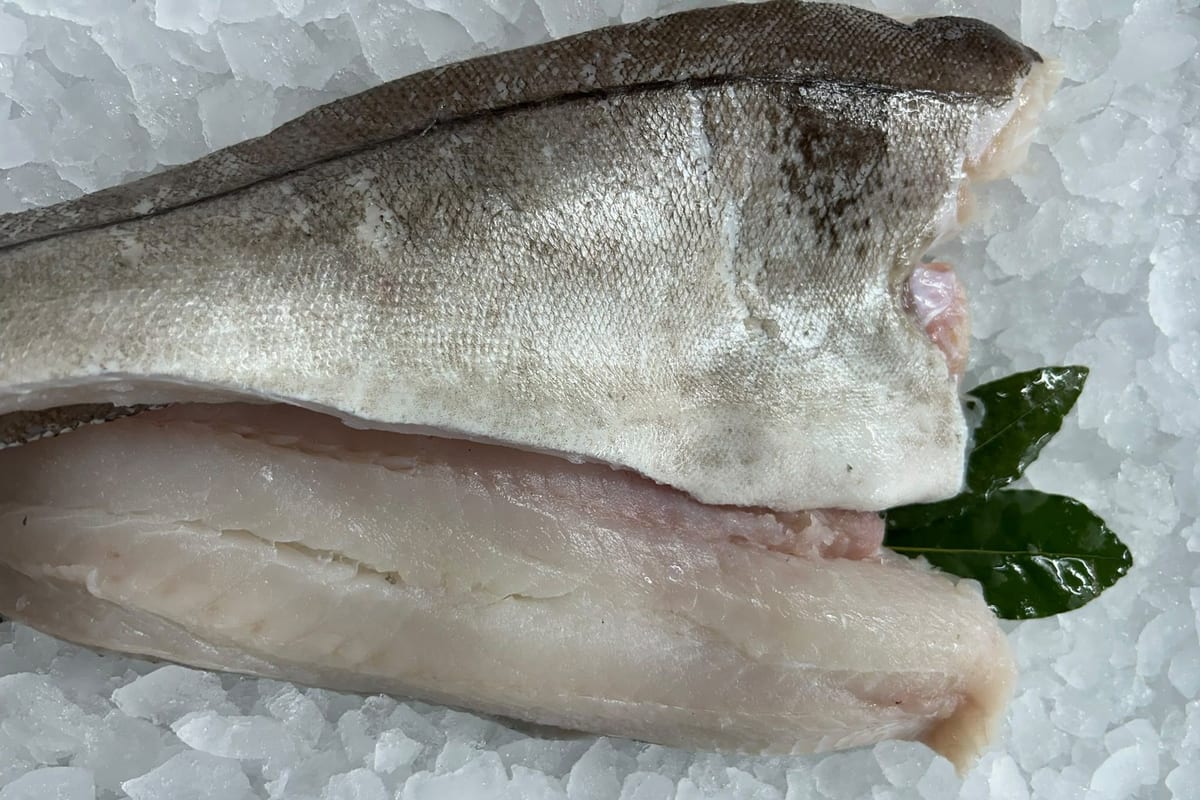
It’s a smaller, slimmer fish than cod, easily identified at market by a black “thumbprint” mark on each shoulder, said to be where St Peter pressed the fish before releasing it. Whatever the origin, it’s a reliable way to know what you’re buying.
Where Our Haddock Comes From
Our haddock comes from Norway, Denmark and Iceland, and it is available all year round. Icelandic haddock is the gold standard: MSC-certified, consistent quality, and on our counter within days of landing.
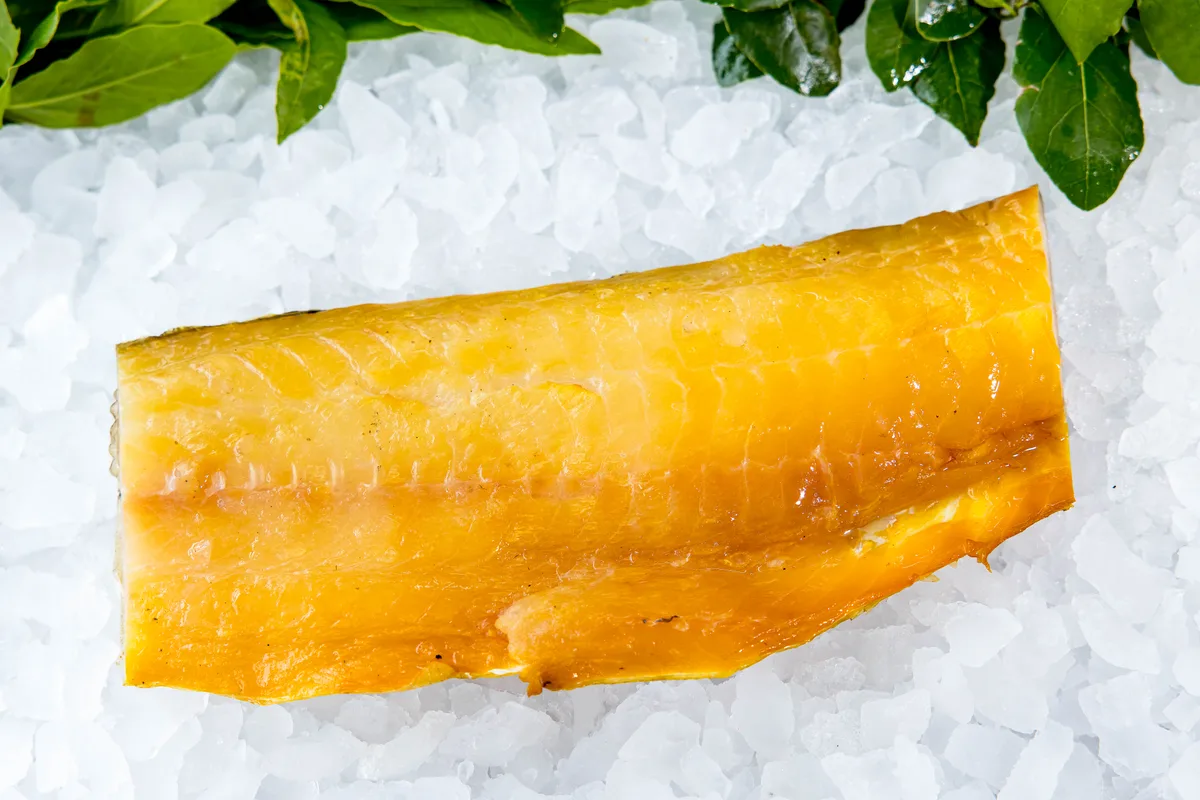
Smoked haddock is a different supply chain. The best smoked haddock comes from traditional smoke-houses (Arbroath is the most famous) where fillets are salted and cold-smoked over oak or beech. Un-dyed is the only version worth buying. The natural colour is a creamy pale gold, and anything bright yellow has had dye added.
The Best Time to Buy Haddock
Haddock is available all year round. Like cod, it is at its best in the colder months. Autumn through early spring (September to April) is when the flesh is firmest and the flavour is at its peak. Spawning happens in late winter and into spring, after which the fish are leaner and less interesting through summer.
Smoked haddock keeps for longer once it is in your fridge, which makes it a flexible option year-round.
How To Cook Haddock
Battered for fish and chips: Pat the fillet dry, dredge in flour, dip in cold beer batter. 180°C oil for 4-5 minutes. Crisp golden batter, flaky white interior. The case for haddock here is the sweeter, more aromatic flesh.
Breaded: A lighter crust than batter, and it lets the sweetness of the haddock through rather than hiding it. Flour, beaten egg, breadcrumbs. Shallow-fry for 3 minutes a side, or bake at 200°C for 15 minutes.
Smoked haddock poached in milk: A Sunday-night classic. Cover the fillet with cold milk, add a bay leaf and a few peppercorns, bring to a bare simmer, cook for 6-8 minutes. The infused milk becomes the base for the sauce.
Kedgeree: The Anglo-Indian breakfast of flaked smoked haddock, basmati rice, boiled eggs, curry spices, parsley. Use the poaching milk to enrich the rice.
Fish pie: Smoked haddock is one third of the classic fish-pie trio (with cod and salmon). The smoke gives the pie its character.
Pan-fried fresh fillet: Skin-on, hot pan, butter, lemon. 4 minutes on the skin, 2 on the flesh. Don’t over-cook. Haddock is more delicate than cod and gets dry fast.
Soft-poached: In a court-bouillon for 6-8 minutes. Brilliant in fish cakes the next day.
Buying Tips From The Counter
- Look for the thumbprint. It guarantees you’re getting haddock, not whiting or pollock pretending to be haddock.
- For smoked, ask if it’s un-dyed. If it’s bright yellow, it’s been coloured. If it’s creamy pale gold, it’s been properly smoked.
- Fresh haddock fillets should be pearly white. Any greyish or yellowish tint is age.
Haddock From Parkstone Fisheries
Fresh haddock fillets cut to order, plus traditional un-dyed smoked haddock from proper smoke-houses. Want a fish pie mix with cod, salmon, and smoked haddock pre-diced? We make that up at the counter: ask in the shop or call 01202 747661, as it isn’t sold online. Free delivery across all BH postcodes, £40 minimum order.
From Our Counter
Buy Haddock From Parkstone Fisheries
Fresh, prepared to your specification, and delivered across all BH postcodes by refrigerated vehicle.
Haddock: Frequently Asked Questions
Cod or haddock for fish and chips?
It's a regional argument. Cod dominates in the south and London; haddock is the king in Scotland and the north of England. Cod has bigger flakes and a milder flavour; haddock has a sweeter, more distinctive taste. We'd nudge you towards haddock (the flavour is better) but honestly, both are excellent. Try them side by side.
What is smoked haddock?
Smoked haddock is haddock fillet that's been cured (salted) and cold-smoked over oak or beech. Naturally smoked haddock is creamy yellow and the colour of unbleached wax. Anything bright yellow has had dye added. We sell only un-dyed naturally smoked haddock. It's the backbone of kedgeree, fish pies, and a classic Scottish breakfast.
Is haddock sustainable?
Generally yes. MSC-certified Icelandic and Faroese haddock is well-managed and a responsible choice. North Sea haddock has recovered and is certified. We source from sustainable fisheries and won't buy fish from over-fished stocks.
What's the difference between cod and haddock?
Cod has larger, whiter flakes and a milder, almost neutral flavour. Haddock has finer flakes, a sweeter and more aromatic taste, and a softer texture. Cod takes batter better; haddock takes smoke better. They're cousins (both in the cod family) but they cook and taste distinctly different.
Explore More Species
Cod
Britain's favourite white fish, broken down properly: origin, season, sustainability, and how to cook it well at home
Read guide →Lemon Sole
Not actually a sole, but one of the loveliest flat fish in the Channel: delicate, sweet, and perfect for a quick supper
Read guide →Plaice
The orange-spotted flat fish of the Channel: delicate, sweet, and beautifully simple to cook
Read guide →Poole's Fishmonger Since the 1920s
Order Fresh Fish Today
Browse our shop online, call us on 01202 747661, or visit us at 12 Bournemouth Road, Poole.