Plaice: A Fishmonger's Guide
The orange-spotted flat fish of the Channel: delicate, sweet, and beautifully simple to cook
Also known as: European plaice
When Is Plaice In Season?
Plaice is available all year round but goes out of condition during the winter due to spawning and needs recovery time to fatten up. Best May to December.
Please note that all wild-caught fish is always subject to availability, catches and weather conditions.
What Is Plaice?
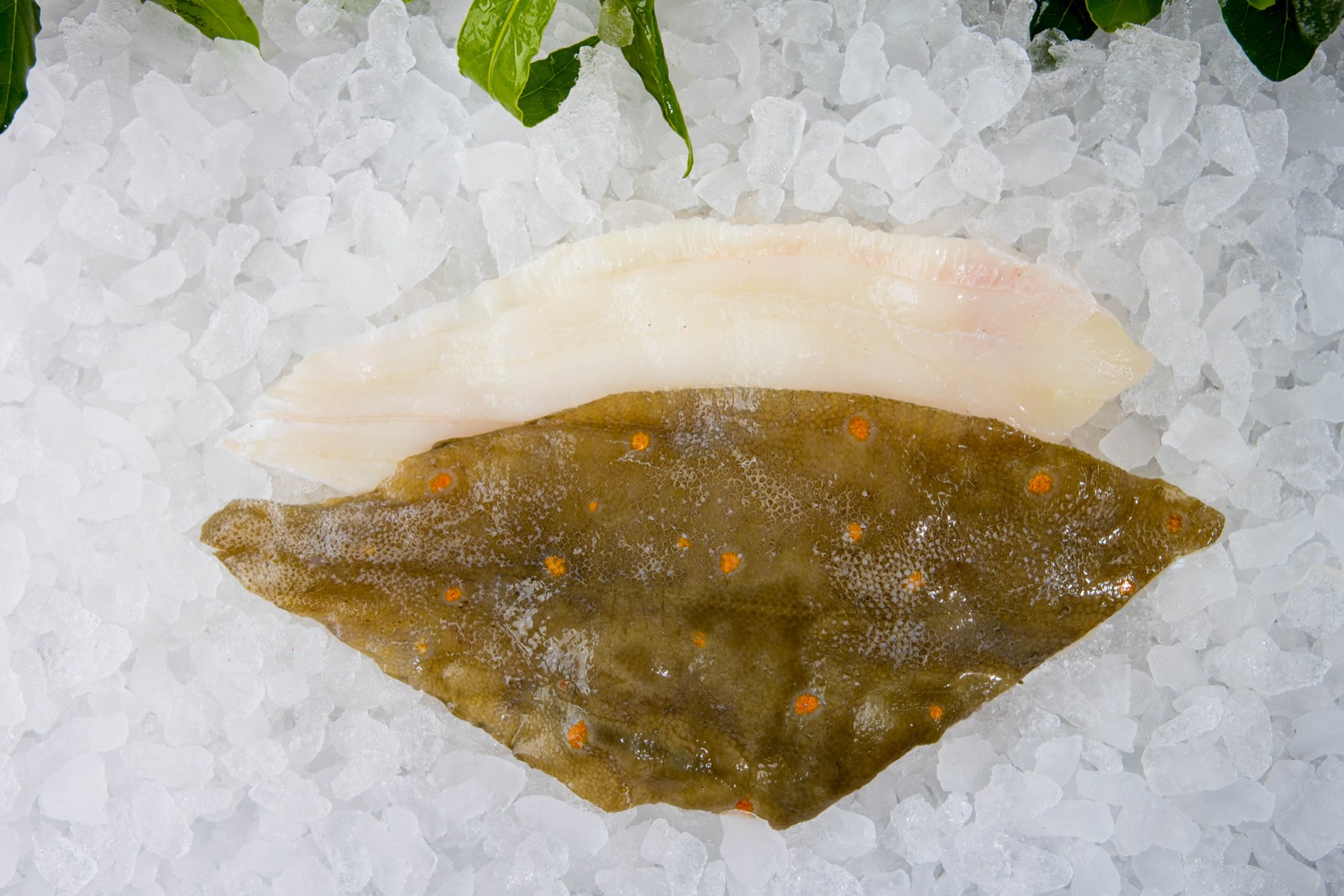
Plaice (Pleuronectes platessa) is the orange-spotted flat fish that anyone who’s grown up near a UK fish counter will recognise on sight. It’s a Channel and North Sea native: flat, brown-backed, with vivid red or orange spots on its upper side. Underneath, it’s snow white.
Plaice lives on sandy seabeds, lying camouflaged with both eyes on top of its head (flat fish are born swimming upright and migrate their eyes over to one side as they grow, one of the stranger transformations in nature). It’s a delicate, sweet, mild fish, one of the most user-friendly fish for someone learning to cook properly with whole fish on the bone.
Where Our Plaice Comes From
Local Channel day-boats and the Dorset coast whenever possible. The South Coast has good plaice grounds and the fish doesn’t have to travel far. Some of our plaice comes from the wider North Sea fishery, which is also well-managed and certified.
Plaice is one of the better-news stories in UK fisheries. The North Sea stock has recovered substantially since the dark days of the late 1990s and early 2000s, and is now considered healthy. You can eat it with a clear conscience.
The Best Time to Buy Plaice
Plaice spawns in January through April and is in poor condition during that window. The flesh becomes thin, watery, and lacking in flavour. A spawning plaice is not the fish you want on your plate.
The proper season is May to December, with summer and early autumn the absolute peak. The fish are fat, the flesh is firm, and a whole plaice grilled with butter and lemon is one of the great simple summer dinners.
How To Cook Plaice
Plaice is a delicate fish that rewards a gentle hand. Don’t overcook it: the flesh goes from perfectly tender to mushy fast.
Pan-fried whole, à la meunière: The classic French treatment and the best thing you can do with a whole plaice. Dust the fish in flour, season, fry in foaming butter for 4-5 minutes a side. Finish with capers, lemon, parsley. Lift the fillets off the bone at the table.
Pan-fried fillets: Skin-side down in butter, 2-3 minutes, flip for 30 seconds. Plaice cooks fast, so keep an eye on it.
Grilled whole: Slash the skin, brush with butter, under a hot grill for 6-8 minutes. The skin crisps, the flesh stays moist.
Deep-fried in batter: A small whole plaice, battered, fried. Better than cod for some palates because the flavour is more delicate.
Steamed Asian-style: Whole fish with ginger, spring onion, soy. Light and elegant.
Goujons: Strips of plaice fillet, breaded, deep-fried. The best fish goujons you’ll ever make. Kids love them.
Buying Tips From The Counter
- Bright spots = fresh. The orange spots fade as the fish ages. Vivid, sharp colours mean recently landed.
- Avoid early spring. January through April is spawning season: the fish is at its worst.
- Whole over filleted. Better value, better freshness assessment, more cooking options.
- Press the underside. Should be firm. Flat fish go soft fast.
Plaice From Parkstone Fisheries
Plaice fillets and whole fresh plaice, filleted or prepared to your spec at the counter. Free delivery across all BH postcodes, £40 minimum order.
From Our Counter
Buy Plaice From Parkstone Fisheries
Fresh, prepared to your specification, and delivered across all BH postcodes by refrigerated vehicle.
Plaice: Frequently Asked Questions
When is plaice in season?
Plaice spawns in the first months of the year (January-April) and is at its worst during that window: the flesh is thin and watery. The proper season runs May to December, with summer and early autumn the peak. A summer plaice is one of the great underrated fish of UK waters.
How can I tell plaice from other flat fish?
Plaice is easy: bright orange or red spots on a brown back. No other British flat fish has those spots. Lemon sole has yellow-brown skin with a smoother appearance, dab has rough skin, and turbot is much larger and warty. If it's covered in orange dots, it's plaice.
Should I buy plaice whole or filleted?
Whole if you can. Flat fish hold their freshness better whole, the bone adds flavour during cooking, and it costs less per pound. Fillets are convenient but lose moisture faster. We'll fillet a whole plaice for you at the counter if you want. Just ask.
Is plaice sustainable?
Channel and North Sea plaice stocks have recovered substantially over the past decade and are now in good shape. Look for MSC-certified plaice or fish from boats using selective nets. We source local Channel-caught fish where possible.
Explore More Species
Lemon Sole
Not actually a sole, but one of the loveliest flat fish in the Channel: delicate, sweet, and perfect for a quick supper
Read guide →Bass
Wild South Coast bass and farmed bass from Greece and Turkey: origin, season, sustainability, and the proper way to cook it
Read guide →Haddock
Fresh haddock, smoked haddock, and why some of us prefer it to cod: origin, season, and the proper way to cook both
Read guide →Poole's Fishmonger Since the 1920s
Order Fresh Fish Today
Browse our shop online, call us on 01202 747661, or visit us at 12 Bournemouth Road, Poole.