Oysters: A Fishmonger's Guide
Native UK oysters and Pacific rock oysters: when each is at its best, how to open them safely, and what to drink with them
Also known as: natives (UK native), rocks (Pacific rock)
When Are Oysters In Season?
Rock oysters are available all year round: they are triploid, meaning sterile, so they never spawn and hold their condition right through the summer. Native UK oysters follow the traditional R-in-the-month rule (September-April).
Please note that all wild-caught fish is always subject to availability, catches and weather conditions.
What Are Oysters?
Oysters are the deepest, most ancient connection between people and the sea. Romans loved British oysters so much they built a road to West Mersea to get them home faster. Victorians ate oysters by the barrel; they were poor-people food then. Today they’re more of a luxury, but the fundamental thing is the same: a living animal you eat raw, that tastes of the exact water it grew in.
There are two oysters you’ll meet in the UK:
Native oysters (Ostrea edulis): flat, round, rarer, more expensive, with the more complex flavour. The traditional British oyster. Mersea, Whitstable, Lindisfarne, the Fal, and a few Scottish lochs.
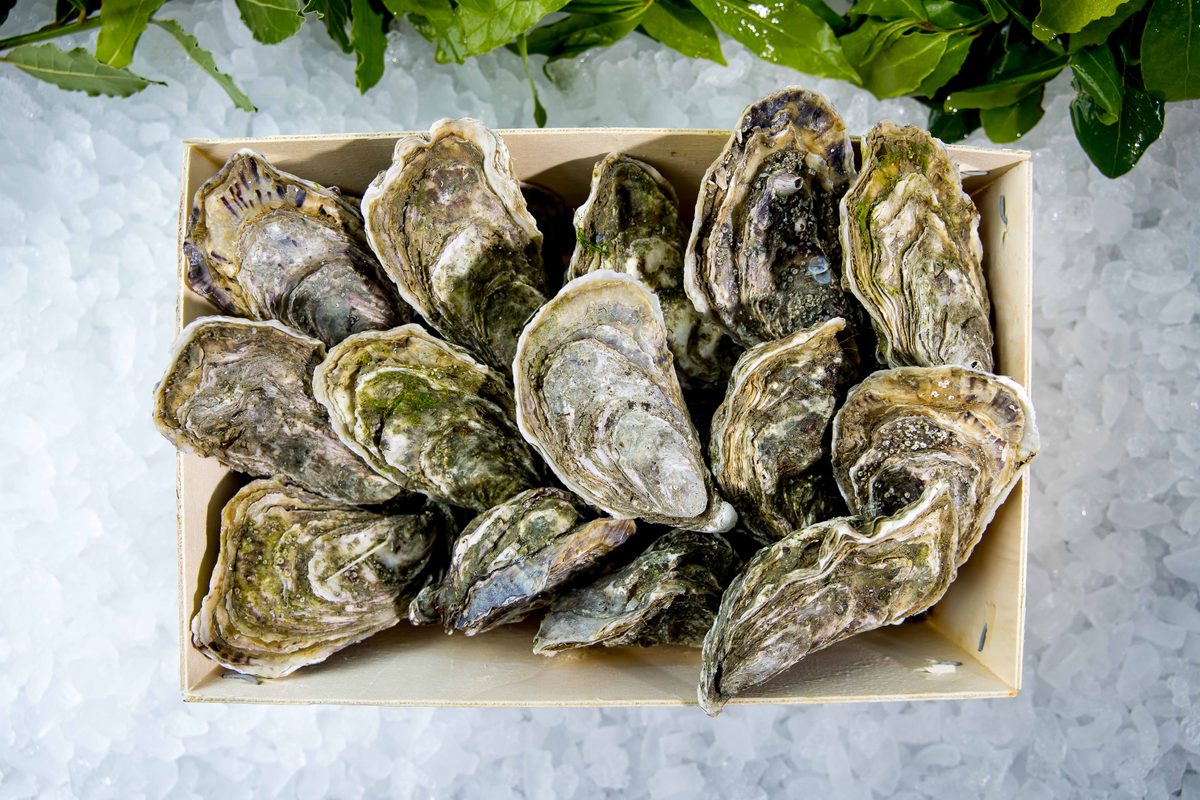
Pacific rock oysters (Crassostrea gigas): long, ridged, teardrop-shaped. Introduced to UK waters in the 1960s and now the dominant farmed oyster. Available year-round, slightly milder, plumper.
Both are filter feeders. They pull plankton out of the water and clean it as they grow. An oyster bed is one of the most ecologically positive forms of food production on the planet.
Where Our Oysters Come From
Our oysters are local and from Jersey. The merroir (oyster equivalent of terroir: the influence of the specific water on the flavour) is real and noticeable, so oysters from different waters really do taste different.
We don’t keep oysters in stock daily; they’re a special-order item. A few days’ notice is best so we can source the best quality.
The Best Time to Buy Oysters
The old rule (eat oysters only in months with an R) was sound advice for native UK oysters and still is. Native oysters spawn in May, June, July, August and the flesh is poor during that window. The proper season for natives is September through to April, peaking in the cold months.
Rock oysters are available all year round, and there is a proper reason for it rather than a marketing one. The rock oysters we sell are triploid: they carry three sets of chromosomes instead of two, which makes them sterile. A sterile oyster never spawns, so it never goes milky and soft the way a native does in high summer. It simply keeps feeding and holding condition.
That is why the R-in-the-month rule does not apply to half the oysters on our counter. Rocks are still excellent through the cold months (plump, sweet and briny) but a July rock is a perfectly good oyster, and that surprises most people.
How To Eat Oysters
Raw, on ice, with very little adornment: The right way. A fresh oyster needs nothing more than a squeeze of lemon, a tiny dash of Tabasco or a few drops of mignonette (red wine vinegar with finely chopped shallot). Eat in one go: tip the shell, chew once or twice to release the flavour, swallow.
Grilled with garlic butter: Open them, leave them in the half-shell, top with parsley-garlic butter, under a hot grill for 90 seconds. Slightly cooked, still mostly raw inside.
Rockefeller: Spinach, cream, herbs, breadcrumbs, butter, grilled until bubbling. Old New Orleans classic.
Kilpatrick: Worcestershire sauce and a tiny piece of bacon under the grill. Australian classic, still excellent.
Tempura: Battered and briefly deep-fried. The shell-as-dish thing doesn’t work; remove and batter just the oyster meat.
What To Drink With Oysters
The classic pairings work because they don’t fight the brine and minerality:
- Champagne or proper traditional-method sparkling wine
- Muscadet sur lie: the historic match
- Chablis: flint, citrus, no oak
- Guinness: actually works, especially with rock oysters
- Iced vodka or aquavit: Scandinavian tradition
Buying Tips From The Counter
- Buy live, eat the same day. Oysters that aren’t alive shouldn’t be eaten.
- Tap the shell: it should snap shut. A gaping, unresponsive oyster is dead. Discard.
- Keep cold and flat-side up. Store in the fridge with a damp cloth, never in water.
- Don’t try to shuck without an oyster knife. Hospital visits aren’t worth it. We can shuck for you.
Oysters From Parkstone Fisheries
Oysters are a special-order item. Call Steve on 01202 747661 or email info@parkstonefisheries.net with what you need and when. We source the best of what’s available: natives in season (September-April), Pacific rock oysters year-round. Free delivery across all BH postcodes, £40 minimum order. For larger orders (parties, weddings, restaurants), a few days’ notice is best.
From Our Counter
Buy Oysters From Parkstone Fisheries
Fresh, prepared to your specification, and delivered across all BH postcodes by refrigerated vehicle.
Oysters: Frequently Asked Questions
When are oysters in season?
The old rule (eat oysters only in months with an R in the name) applies to UK native oysters (September through April). Natives spawn in summer and the flesh is poor during that window. Rock oysters are a different story and available all year round: they are triploid, which means sterile, so they never spawn and never go milky. That is why the R-in-the-month rule does not apply to half the oysters we sell. We can source both. Native oysters need a few days' notice.
What's the difference between native and rock oysters?
Native UK oysters (*Ostrea edulis*) are flat, round, and have a deeper, more complex, mineral flavour. They're rarer and more expensive. Pacific rock oysters (*Crassostrea gigas*) are the long, ridged, teardrop-shaped ones: they're meatier, faster-growing, milder in flavour, and available year-round. Most oysters served in UK restaurants today are rocks.
How do I shuck an oyster safely?
Wrap the oyster in a folded tea towel with the cup-side down, flat-side up. Hold it firmly on a board. Insert an oyster knife (not a regular knife; the wrong tool here is dangerous) into the hinge at the back, twist firmly until you feel it pop. Slide the knife along the underside of the top shell to cut the muscle. Lift the top shell off. Slide under the oyster to cut the bottom muscle. Don't drink them with shell shards. Strain through a fine sieve if in doubt.
Are oysters safe to eat raw?
When they're properly fresh, alive when shucked, and stored cold throughout, yes. Oysters are filter-feeders, so a poorly handled or wrongly sourced oyster can carry illness. Buy from a reputable source, eat them on the same day, and reject any oyster that doesn't snap shut firmly when tapped while alive. Pregnant women, the elderly, and the immunocompromised are usually advised to skip raw oysters.
How many oysters per person?
For a starter or canapé portion, allow 3-6 oysters per person. For a main meal of oysters and bread, allow 8-12. For a big seafood platter, 4-6 oysters works alongside other shellfish.
Explore More Species
Lobster
Pot-caught Dorset lobster, kept live in our own tanks until you order: origin, season, and the right way to cook one at home
Read guide →Prawns
King, tiger, Atlantic, Argentinian red: which prawn for what, where they come from, and how to cook them properly
Read guide →Bass
Wild South Coast bass and farmed bass from Greece and Turkey: origin, season, sustainability, and the proper way to cook it
Read guide →Poole's Fishmonger Since the 1920s
Order Fresh Fish Today
Browse our shop online, call us on 01202 747661, or visit us at 12 Bournemouth Road, Poole.