Prawns: A Fishmonger's Guide
King, tiger, Atlantic, Argentinian red: which prawn for what, where they come from, and how to cook them properly
Also known as: shrimp (US usage), gambas (Spanish), scampi (Norway lobster, different)
When Are Prawns In Season?
Most prawns are available year-round either fresh or frozen. Cold-water prawns from Greenland and the North Atlantic are at peak in winter.
Please note that all wild-caught fish is always subject to availability, catches and weather conditions.
What Are Prawns?
“Prawns” is a loose commercial term that covers dozens of species. In a UK fishmonger’s, what you’ll commonly see falls into a few categories:
- Atlantic cold-water prawns (Pandalus borealis): small, sweet, usually sold cooked and pink. The prawn-cocktail prawn.
- King prawns: a commercial name for various larger warm-water prawns, including farmed Litopenaeus vannamei (white-leg) and others. Sweet, firm, the everyday cooking prawn.
- Tiger prawns (Penaeus monodon): the big ones with distinctive black stripes when raw. Often the largest and most impressive on a plate.
- Argentinian red shrimp (Pleoticus muelleri): wild South Atlantic, deep pink-red even when raw, sweeter and firmer than most farmed prawns.
The biggest single distinction in practice is raw vs cooked and cold-water vs warm-water: that’s what will decide how you use them.
Where Our Prawns Come From
Different prawns, different sources:
Cold-water Atlantic prawns come from Greenland, Iceland, and Norway, usually cooked at sea on the boats and frozen immediately. MSC-certified options are widely available. These are the small pink prawns for prawn cocktail or salad.
King prawns in our shop are predominantly responsibly farmed white-leg prawns from certified Vietnamese or Indian farms. We avoid uncertified intensive farms with poor welfare and environmental records.
Tiger prawns are mostly farmed in Southeast Asia. Look for ASC or BAP certification.
Argentinian red shrimp are wild-caught in the cold South Atlantic, a more sustainable and interesting product than most warm-water farmed prawns.
We can’t pretend prawn farming is as clean as wild local catches. But responsibly farmed prawns from certified producers are a reasonable everyday choice, and the wild Argentinian alternative is excellent when you want to treat yourself.
The Best Time to Buy Prawns
Most prawns are available year-round, either fresh-frozen at source or fresh through reliable supply chains. North Atlantic cold-water prawns are at their peak in winter when the cold water makes the flesh sweetest.
There’s no UK wild prawn fishery of any significance, so “in season” doesn’t really apply the way it does to UK fish.
How To Cook Prawns
The cardinal rule: cook fast, stop early. Prawns go from translucent to opaque to overcooked-and-rubbery in seconds.
Pan-fried, garlic butter: Hot pan, butter, garlic, raw prawns shell-off. 90 seconds each side. Squeeze of lemon, chopped parsley. Best done with king prawns or tiger prawns.
Shell-on, BBQ or griddled: Wild Argentinian reds are made for this. Whole, shells on, brushed with oil, high heat, 2 minutes a side. The shells protect the flesh and the carbon-on-shell flavour is incredible.
Tempura: Raw peeled prawns, light batter, hot oil. 90 seconds. Salt at the end.
Stir-fried: High heat, raw prawns, in last. Vegetables go first, prawns in for the final minute.
Boiled / poached: Drop raw shell-on prawns into rapidly boiling salted water. As soon as they float and turn pink (2-3 minutes), drain. Plunge into iced water to stop them cooking. Best for prawn cocktail or salads where you want them properly cold.
Raw: Yes. Properly fresh raw prawns, sashimi-grade, are sweet, briny, and one of the best ways to eat them. Common in Spanish gambas, Japanese sushi, Italian crudo.
Buying Tips From The Counter
- Raw over cooked, every time. More flavour, more control.
- Shell on if cooking with heat. The shell protects the flesh and adds flavour to the pan.
- Look for firm, glossy flesh. Mushy or sticky = thawed and refrozen.
- Smell. Fresh prawns smell of the sea. Ammoniac smell = not fresh.
Prawns From Parkstone Fisheries
Whole raw king prawns and wild black tiger prawns, raw peeled king prawns, and cooked shell-on prawns: peeled, deveined, head off, to your specification at the counter. For Argentinian red shrimp, ask at the counter or call 01202 747661, as they aren’t in the online shop. Free delivery across all BH postcodes, £40 minimum order.
From Our Counter
Buy Prawns From Parkstone Fisheries
Fresh, prepared to your specification, and delivered across all BH postcodes by refrigerated vehicle.
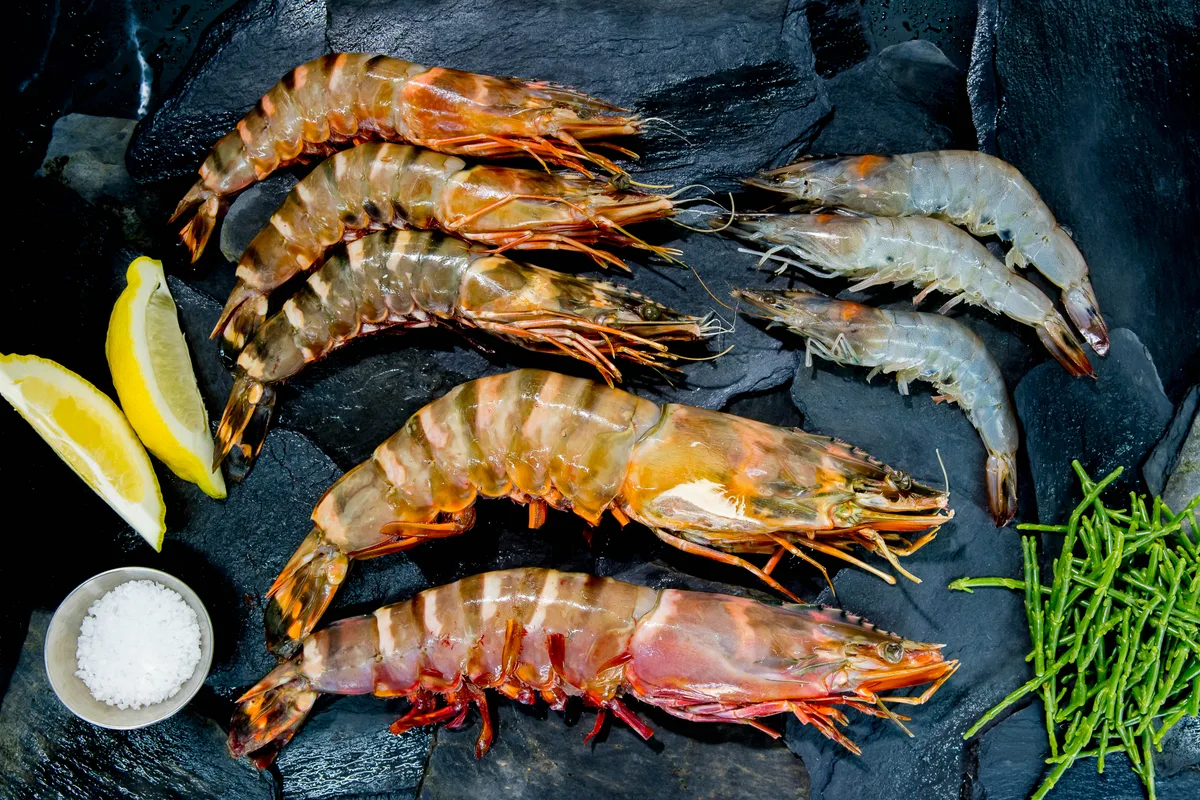
Whole Raw King Prawns
Whole raw king prawns: farmed from Ecuador, or wild sea caught black tiger prawns from Africa.
View product →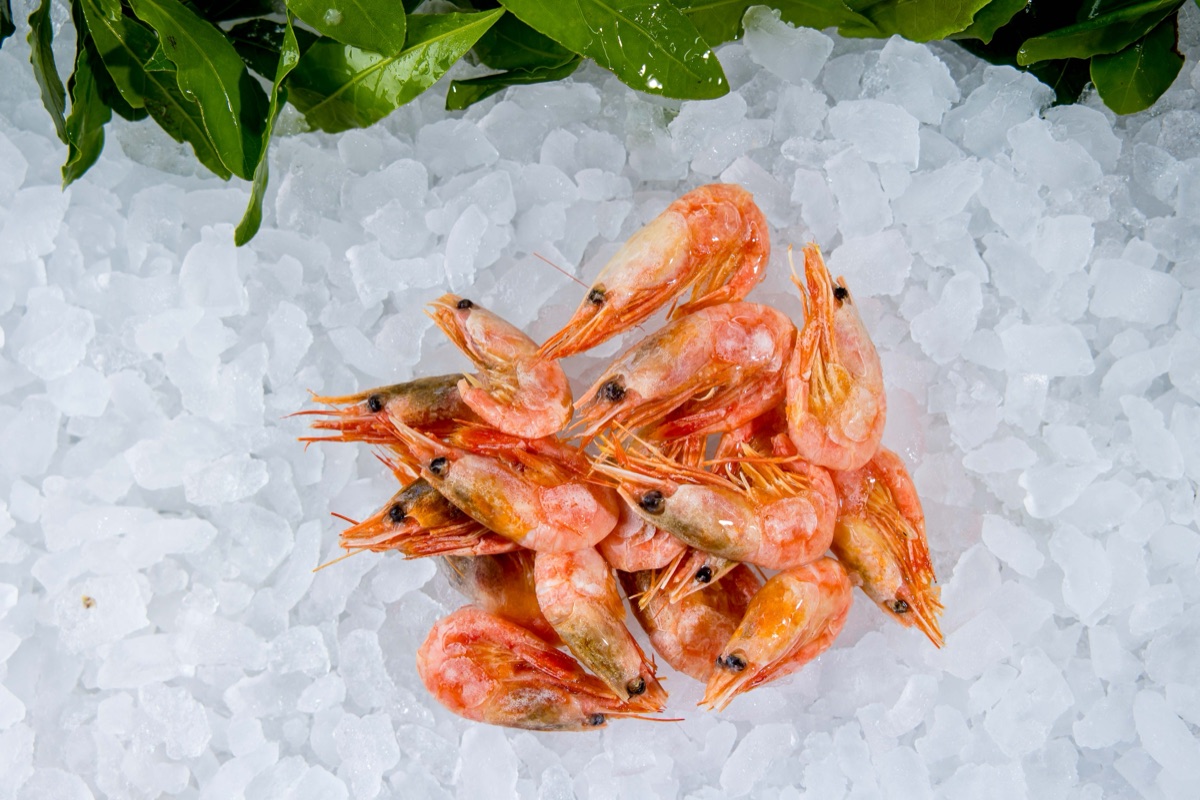
Shell On Prawns Cooked 80/100 per kg
Succulent Norwegian cooked shell on prawns.
View product →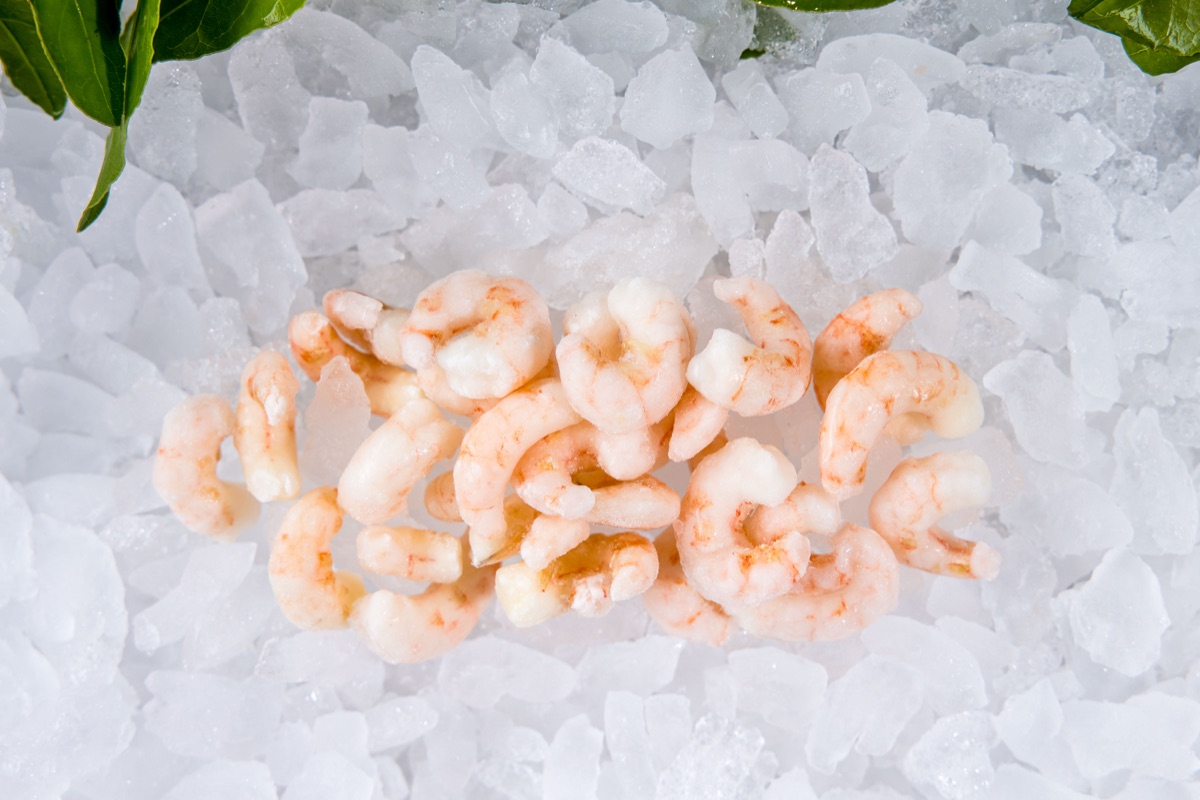
Royal Greenland Peeled Cold Water Prawns
Small cooked and peeled pink prawns: ready for sandwiches, salads, and garnishes.
View product →Prawns: Frequently Asked Questions
What's the difference between king prawns and tiger prawns?
King prawns and tiger prawns are different species but often used interchangeably. Tiger prawns (*Penaeus monodon*) are the larger ones with the distinctive black stripes when raw. King prawns is a looser commercial term for various large warm-water prawns. Both work for the same dishes: pasta, curries, BBQ, scampi. Size matters more than the name.
Are Argentinian red prawns good?
Excellent. Argentinian red shrimp (*Pleoticus muelleri*) are wild-caught in the cold South Atlantic, sweeter than warm-water prawns, with a firmer texture. They cook from naturally pink-red to a deeper red. A real treat, and they're sustainable. We sell them whenever we can get them.
Should I buy raw or cooked prawns?
Raw, almost always. Cooked prawns are convenient for prawn cocktail or salad but they've already lost flavour to the cooking water. Raw prawns let you control how they cook, and prawns cooked properly (briefly, in butter or oil) are immeasurably better than anything pre-cooked.
How do I cook prawns without making them rubbery?
Cook fast and stop early. Prawns are done the moment they turn pink and curl into a C-shape, usually 90 seconds to 2 minutes a side in a hot pan. If they curl all the way into an O, you've overdone them. The carryover heat will finish them after you take them out of the pan.
Explore More Species
Lobster
Pot-caught Dorset lobster, kept live in our own tanks until you order: origin, season, and the right way to cook one at home
Read guide →Oysters
Native UK oysters and Pacific rock oysters: when each is at its best, how to open them safely, and what to drink with them
Read guide →Bass
Wild South Coast bass and farmed bass from Greece and Turkey: origin, season, sustainability, and the proper way to cook it
Read guide →Poole's Fishmonger Since the 1920s
Order Fresh Fish Today
Browse our shop online, call us on 01202 747661, or visit us at 12 Bournemouth Road, Poole.